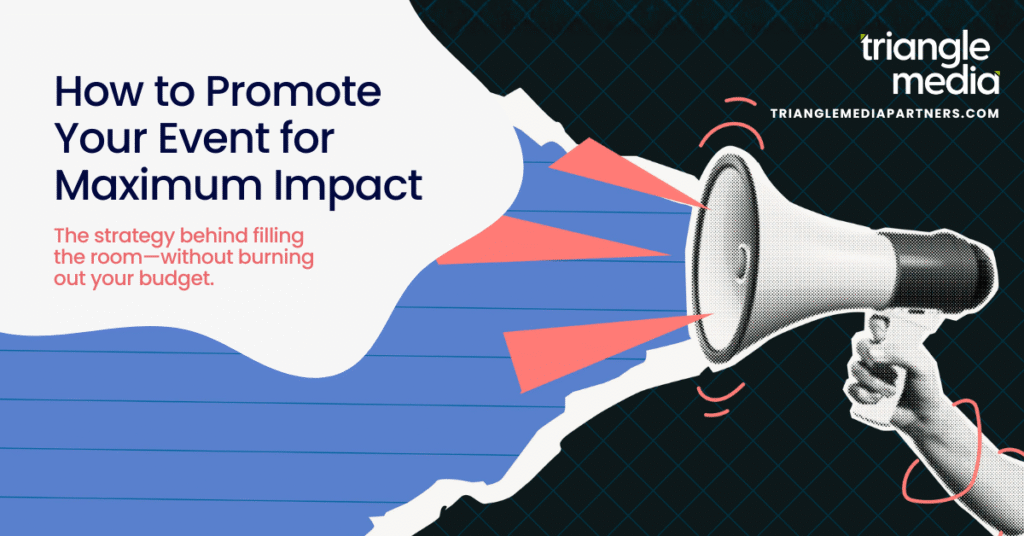
Promoting an event is a great marketing challenge because there’s an immediate answer on whether you were successful or not. With branding or lead generation, you may not know for months if your efforts paid off. With an event, you’ll find out on event day if the work you did brought people in the door.
As a recovering event planner, I’ve seen the patterns. People are waiting longer than ever since COVID to buy tickets, which makes timing, thoughtful budgeting, layering, and consistency so important. Let me walk you through how I think about promoting an event, from organic reach to paid campaigns, and some real examples of what I’ve learned along the way.
Start With Organic Reach
First, always exhaust your organic channels. The people in your database or who follow you on social are generally the best place to start. Create a Facebook Event (yes, people still do this), boost it with a little budget, and share details through your newsletter or a standalone email. Of course, your website should have a clear, easy sign-up option that answers all the who, what, when, where, and why.
I also recommend community calendars. Here in the Triangle, there are several that are musts:
- In the Triangle: The Triangle Weekender reaches 40,000+ people weekly through its email newsletter. Indy Week is strong for arts programming and restaurant or bar events.
- In Durham: Discover Durham has great SEO visibility and strong social reach, especially if your event brings heads in beds. Downtown Durham Inc. keeps a thorough and well-trafficked downtown calendar.
- In Raleigh: Visit Raleigh offers a robust directory and sometimes adds events to its social or email coverage. Downtown Raleigh Alliance shares weekly specials and community events.
- For free events: Triangle on the Cheap is a go-to for free, discounted, or low-cost happenings.
These outlets take just a few minutes to submit to, but the visibility is worth it.
Add Paid Channels for More Firepower
If you need to grow your attendance or reach new people, you’ll need to put some investment behind it.
Paid social ads are one of the most effective ways to drive ticket sales, especially in the arts. Conversions tend to be the highest on Meta. You can run ads yourself starting at $10 a day, or you can work with an agency like Triangle Digital Partners to manage a larger campaign.
Targeted email is another great tool. First-party lists – like the ones media outlets build from event buyers or “Best Of” voters – are gold. “Best of” programs are run by Durham Magazine, Chapel Hill Magazine, Chatham Magazine and The Indy. Expect to pay $30-$40 per thousand sends (approximately $1,000 for 20,000 sends) for a first party list. You can also buy third-party lists segmented by interest and demographics (think: art lovers, women 20–40, or specific zip codes). Third party lists are generally less effective so you have to buy bigger lists because there isn’t a relationship with the sender, but you can target more specifically and this method traditionally costs less at $20-$30 per thousand ($1,200-$1,500 for 50,000 sends). Email gives you the space to tell your story and push registrations in a way ads sometimes can’t.
You could also choose to have your ad pop up in email newsletters from a targeted media source that go out on a weekly basis. Axios Raleigh is a news based audience with segments with a daily newsletter. The Triangle Weekender’s Thursday weekly newsletter is to a lifestyle audience of 40,000+ that offers two sponsored events a week for the price of $325 showing a large image, title, description and link to your ticketing page.
And while more expensive, print, radio, or TV can give you broad awareness and help deliver value to sponsors who want their brand in front of more people. Local options for local TV stations include ABC 11 and WRAL and you could also work with a digital agency for geo-targeted Streaming TV or YouTube. For Radio, consider geotargeted Streaming Radio that targets Pandora, Spotify and iheartradio or consider WUNC. For printed pieces, I would look for your city’s magazine and I hate to say it, skip the papers unless you can afford geotargeted ads in New York Times or Wall Street Journal.
Timing Is Everything
Remember that just doing one thing is not going to work. We so rarely see something once and immediately sign up. It takes many impressions and reminders to drive action.
I recommend three big pushes:
- When tickets go on sale. Push hard on your organic channels.
- Six weeks out. Turn on your paid media and refresh organic content.
- The final two weeks. Save half your budget for this window. For most events, 40–50% of tickets are sold in the last two weeks.
This pattern shows up across industries and events. People are waiting longer to commit, so planning for that surge is critical.
Lessons From Real Events
Sometimes the best lessons come from real-life examples:
- We once promoted an event with very limited creative assets – far from ideal for our campaign managers. But we ran with it, and the ads delivered a 7.5%+ clickthrough rate, nearly 400,000 impressions, and record-high attendance. The takeaway: your ads don’t always need all the bells and whistles to be effective.
- A client with a 55+ audience learned through a survey that the number one reason people weren’t buying tickets was uncertainty around parking. She started offering free parking and highlighted it up front. Attendance went up, and she covered the cost by raising ticket prices slightly.
- My friend Pashara Black once organized a women’s event in Durham and asked every speaker, sponsor, and staff member to post a branded headshot at the same time with their reason for participating. I was 10 minutes late posting (sorry, Pashara!), but the coordinated flood of content created massive FOMO and drove attendance.
- At a first-time conference I attended, organizers gave a discount to the first 25 people who registered. It helped them test demand quickly and gave them social proof to advertise – “look who’s already coming!”
- Another event I saw handed out prizes to attendees who recorded short testimonial videos on-site. They not only captured valuable feedback but also had authentic marketing assets ready for the following year.
These moments show how small, creative touches can have just as much impact as ad spend.
Partnerships Multiply Efforts
Are there other organizations or businesses that share your audience? If so, they can be great partners in promotion. Chambers, associations, and local businesses are often willing to share your event if you make it a win-win – like offering tickets, access, or exposure. Promotion is rarely a passive win anymore. People want to know what’s in it for them.
Make the “Yes” Easy
Keep it simple. On your event listing, make sure people can easily find the basics: date, time, location, cost, and a direct link to register. FAQs like parking, dress code, rain dates, or refund policies should be accessible, but don’t overwhelm people with barriers up front.
And don’t skimp on visuals. Pay for professional photography or video if you can. Show connection, energy, and excitement – and always include a clear call to action. If your ticketing platform supports it, an abandoned cart email can also help you capture last-minute sales.
Final Takeaway
Events are fun to create. Getting attendees is not. Standing out is not. But you can do it! Be aggressive on the front end so you have time to pivot if needed. Build relationships so you have partners, lists, PR opportunities, and a network to lean on. And once people arrive, delight them – because the best marketing for your next event starts with the experience you deliver at this one.